
You found a cheap car on Facebook Marketplace. The seller has the title — but the name on it isn’t theirs. “Don’t worry,” they say, “I’ll just sign it over to you.” Congratulations: you’ve just met title jumping, one of the most common car-sale scams in Florida. It’s illegal, it can leave you holding a car you can’t register, and both buyers and sellers get burned by it. This guide explains exactly what title jumping is, how the scam works, what Florida law says about it, how to spot a jumped title before you pay, and how to transfer a title the legal way.
What Is Title Jumping?
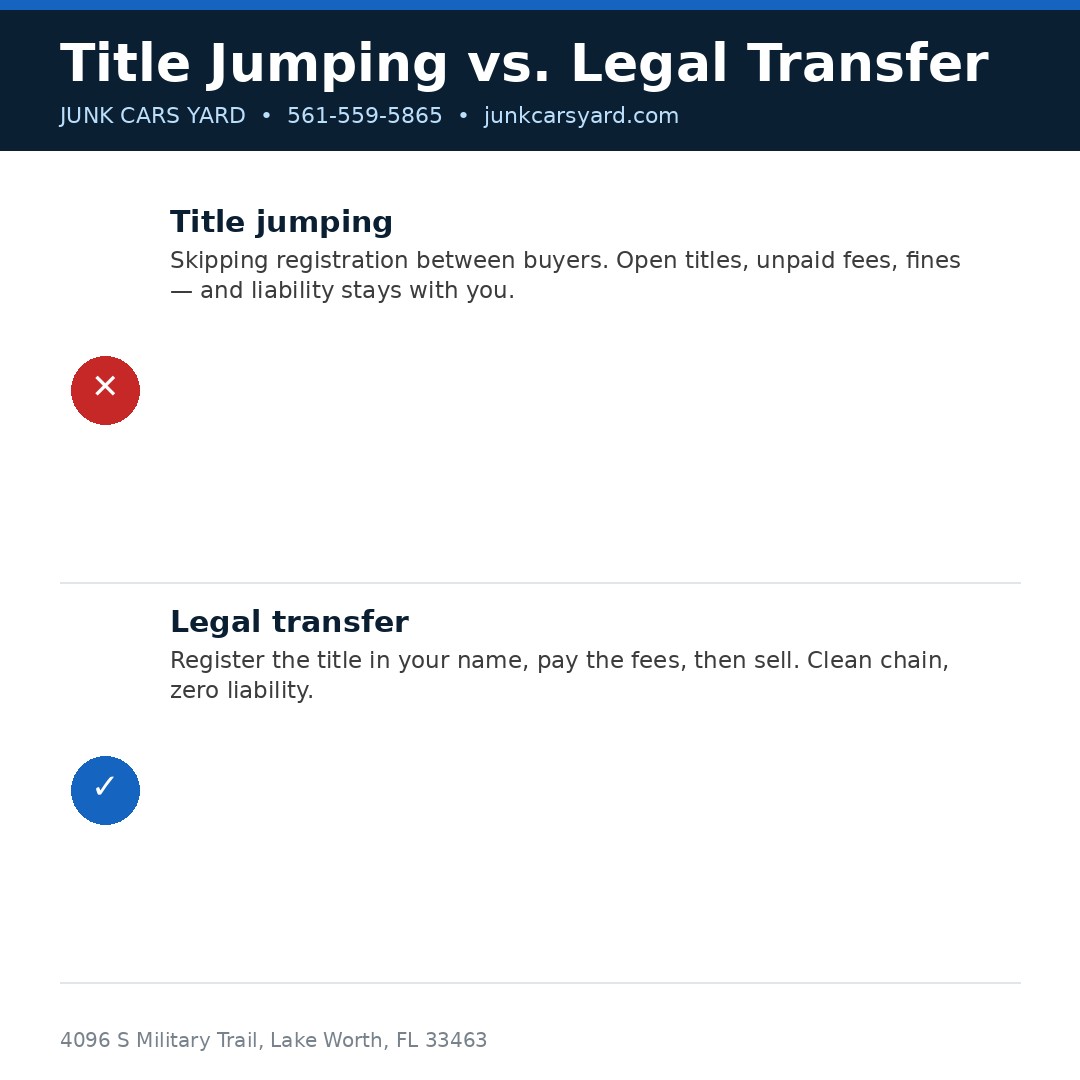
Title jumping (also called title skipping) happens when someone buys a vehicle and then resells it WITHOUT ever registering the title in their own name. The middleman’s name never appears anywhere in the ownership chain — they “jump” over their own ownership. Here’s the classic version: Person A sells a car to Person B. Person B never goes to the tax collector’s office, never pays the transfer fees or sales tax. Instead, Person B flips the car to Person C — you — with Person A’s name still on the title as the seller. On paper, it looks like A sold directly to C. B was never there. That missing link is the whole problem: the state has no record of B ever owning the car, which means no taxes were paid, no registration happened, and the chain of legal ownership is broken.
How Title Jumping Works, Step by Step
- The jumper buys a cheap car (often a junker) from the original owner and gets the signed-over title.
- Instead of registering it — which would mean paying Florida title transfer fees and sales tax — the jumper holds the “open title.”
- The jumper lists the car for sale, often at an attractive price, on Marketplace, Craigslist, or a street corner.
- You buy it. The jumper hands you the title still showing the ORIGINAL owner’s name, sometimes with the buyer line left blank or filled in by the jumper.
- You go to register the car — and the tax collector’s office flags the broken chain. Now the mess is yours.
Why Do People Jump Titles?
Money and laziness, mostly. Registering a title in Florida costs money — transfer fees, plate fees, and sales tax on the purchase price. A flipper turning five junkers a month avoids hundreds in fees by never registering any of them. Some jumpers are also hiding something: a suspended license that prevents them from registering vehicles, or a car with liens, flood history, or odometer issues they don’t want tied to their name. Others are unlicensed dealers — “curbstoners” — flipping cars as an untaxed, unregulated business. Whatever the motive, the buyer inherits the risk.
Is Title Jumping Illegal in Florida?
Yes. Florida treats title jumping as a form of title fraud. The state’s motor vehicle laws require every buyer to apply for a new certificate of title in their own name within a set time after purchase — skipping that step to flip the car is a violation. Depending on the circumstances, consequences can include fines, the vehicle being impounded, criminal fraud charges for repeat or large-scale offenders, and civil liability if the jumped car is later in an accident or racks up tolls and tickets. Note the liability trap: if Person A never filed a Notice of Sale and Person B never registered, tickets and tolls on the car can come back to Person A — which is exactly why sellers should always file Florida’s HSMV 82050 the day they sell. See our HSMV 82050 guide for the details. (General information only — not legal advice. For specific situations, check with the FLHSMV or a Florida attorney.)
Beyond the legal exposure, the everyday fallout is what catches most people. A tax collector’s office can refuse to issue a new title until the ownership chain is repaired — and repairing it often means tracking down the original owner, paying the transfer fees and sales tax the jumper skipped, and waiting while the paperwork is verified. Unpaid tolls, red-light camera tickets, or parking fines accumulated while the jumper held the car can surface during the process too. None of this is quick, and none of it is the buyer’s fault — but the buyer is the one stuck holding the paperwork.
Sellers have a mirror-image risk. Until the state records a new owner, the seller of record stays on the hook: toll violations, tickets, and even liability after an accident can keep arriving at their door. That is exactly why Florida offers the HSMV 82050 Notice of Sale — filing it the day you sell severs that connection. It costs nothing, takes a few minutes, and is the single most important protection a private seller has. Anyone who tells you the paperwork “isn’t necessary” is someone to avoid.
7 Red Flags: How to Spot a Jumped Title Before You Pay
- The seller’s name doesn’t match the name on the title — the #1 red flag.
- The buyer section of the title is already filled in with someone else’s name, or it’s been erased/whitened out.
- The seller can’t show you a matching photo ID, or refuses to.
- The title has no lien listed but the price seems oddly low for the car.
- The seller insists on cash only and rushes you — “someone else is coming at 5.”
- The VIN on the title doesn’t match the VIN on the dashboard or door jamb — walk away immediately.
- The seller flips multiple cars from the same phone number (check their other listings) — that’s an unlicensed dealer.
A simple test cuts through most of the guesswork: ask the seller to complete the deal at the county tax collector’s office. It is the safest place to exchange money and sign paperwork, and a legitimate private seller with a clean title will usually agree. A title jumper will almost never agree — expect excuses, delays, or silence. That reaction alone tells you what you need to know.
Watch the story, not just the paperwork. Jumped cars are usually priced to feel like a bargain without looking suspicious — cheap enough to excite you, not cheap enough to scare you. If the seller can’t answer basic questions about the car’s history, doesn’t seem to know the person named on the title, or the details shift between messages, slow down. A genuine owner knows their car and has nothing to hide about how they got it. When the answers don’t add up, walk away and keep looking.
Finally, trust your read on the seller’s behavior. Legitimate sellers answer questions directly, show ID without being asked twice, and have their paperwork ready. Jumpers deflect, rush, and keep the title out of your hands as long as possible. You don’t need to catch anyone in a lie — you just need to walk away from deals that feel wrong. There will always be another car.
The Legal Way to Transfer a Title in Florida
Doing it right protects both sides. Here’s the clean process: Our guide to signing a Florida car title walks through the seller section step by step.
- Buyer and seller meet with the certificate of title. The seller’s name on the title must match the seller’s photo ID.
- The seller completes the seller section: odometer reading, sale price, date, and signature — in front of the buyer.
- The buyer completes the buyer section with their legal name and address.
- Both parties complete a bill of sale with the VIN, price, date, and signatures. See our guide to selling a junk car in Florida for more.
- The buyer visits the county tax collector’s office, pays the transfer fees and sales tax, and applies for a new title in their name.
- The seller files Form HSMV 82050 (Notice of Sale) immediately — this ends the seller’s liability for the vehicle.
Total time at the tax collector: usually under an hour. Total protection: complete.
What to Do If You Already Bought a Car With a Jumped Title
Don’t panic — but act quickly. First, try to contact the person whose name is actually on the title (the original seller); they may help complete the chain. Second, gather everything: the bill of sale, messages with the jumper, photos of the title as you received it. Third, visit the tax collector’s office and explain the situation honestly — they deal with this regularly and can tell you what documents will fix the chain. Fourth, if the jumper committed outright fraud (forged signatures, rolled-back odometer), file a report with local law enforcement and the FLHSMV. And if the car turned out to be a junker not worth the fight, we’ll buy it — we buy cars in any title situation — call 561-559-5865 and describe what you have.
Title Jumping vs. Curbstoning: What’s the Difference?
They’re cousins. Title jumping is the specific act of skipping registration between buys. Curbstoning is the business model: an unlicensed dealer flipping multiple cars for profit without a dealer license, usually using title jumping as the tool. A curbstoner might jump ten titles a month. Both are illegal in Florida, and both leave buyers with the same broken-chain problems. If a “private seller” has five cars listed from one phone number, you’re dealing with a curbstoner — buy elsewhere.
| Title Jumping | Curbstoning | |
|---|---|---|
| What it is | Reselling a car without ever registering the title in your own name | Flipping multiple cars for profit without a dealer license |
| Who does it | One-off flippers and casual sellers dodging fees | Unlicensed dealers running an off-the-books car business |
| Scale | Often a single vehicle | Many vehicles, often from one phone number |
| How it hurts buyers | Broken ownership chain — you may not be able to register the car | Same broken chain, plus none of the protections a licensed dealer must provide |
| Status in Florida | Illegal — a form of title fraud | Illegal — unlicensed dealing built on title fraud |
Frequently Asked Questions
- Is it illegal to sell a car without registering it in your name first in Florida?
Yes — Florida requires buyers to title vehicles in their own name. Reselling without doing so is title jumping, a form of title fraud with real penalties. - Can I get in trouble for buying a jumped title?
You can end up unable to register the car, and in some cases liable for back fees and taxes to fix the chain. Buyers are victims more often than criminals here — but knowingly participating is risky. - What if the seller signed the title but left the buyer name blank?
That’s an “open title” — the classic jumping setup. Never accept one. Insist the seller completes their section fully and that you complete yours on the spot. - How do I check if a title is clean before buying?
Match the seller’s photo ID to the name on the title, match the VIN on the title to the car’s VIN plates, and look for liens, erasures, or a second buyer’s name already written in. - I lost the title entirely — is that the same as jumping?
No. A lost title is just paperwork — Florida lets owners apply for duplicates. See our no-title guide for what to do. Jumping is deliberately skipping your own registration to dodge fees and records. - Will you buy a car if the title situation is messy?
Call 561-559-5865 and describe it. We deal with Florida title issues daily — missing titles, estate titles, HSMV 82050 transfers — and we’ll tell you straight what we can do.
Sell It Right — Get Cash Without the Games
Whether you’re selling a junker or buying your next car, clean paperwork protects you. Junk Cars Yard buys cars across Palm Beach County with proper, legal transfers every time — straight cash offers, free towing, and we handle the title paperwork with you at pickup. One call to 561-559-5865 and it’s done right. For the full checklist, see what paperwork you need to sell a junk car in Florida.