
Have a car sitting in your driveway that refuses to start? Maybe the engine has failed, the transmission is damaged, or the vehicle has been involved in an accident. Whatever the reason, owning a car that no longer runs can become an unnecessary expense. You may still have to deal with storage, insurance, registration concerns, and the cost of repairs.
The good news is that a car does not have to be in working condition to have value. Many buyers purchase vehicles with mechanical problems, accident damage, or major component failures. Depending on the vehicle’s condition, you may be able to sell it for cash without spending money on repairs first.
If you are wondering, where can I sell a car that doesn’t run?, you have several options. These include junk car buyers, salvage yards, private buyers, auto recyclers, and specialized vehicle removal companies.
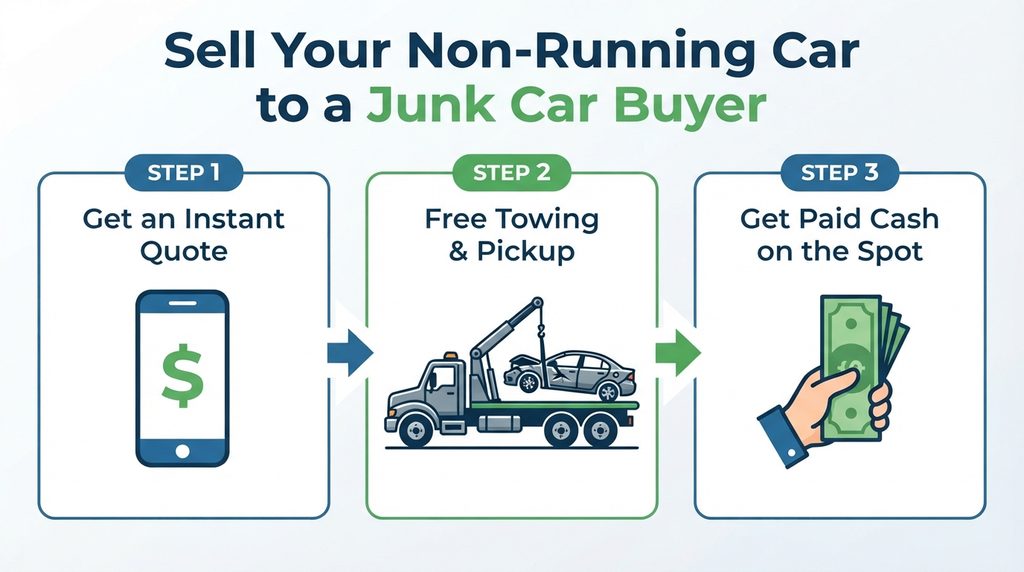
1. Sell Your Non-Running Car to a Junk Car Buyer
A junk car buyer is one of the most convenient options when your vehicle has stopped working and repairing it is no longer practical.
These businesses purchase unwanted vehicles in different conditions, including cars with engine failure, transmission problems, electrical issues, accident damage, or extensive wear. Some buyers also accept vehicles that have been sitting unused for months or years.
One advantage of selling to a junk car buyer is that you generally do not need to repair the vehicle before requesting an offer. You can provide information about its condition, receive a quote, and decide whether the offer works for you.
Many junk car buying services also arrange vehicle pickup, which means you do not have to find a way to transport a car that cannot be driven.
Why consider this option?
- No need to make expensive repairs before selling.
- Many buyers accept damaged and non-running vehicles.
- Pickup and towing may be available.
- You can request a quote without committing to a sale.
- The process is often more straightforward than finding an individual buyer.
For vehicle owners in Lake Worth, Florida, Junk Cars Yard purchases non-running, damaged, and unwanted vehicles and offers pickup arrangements throughout its local service area.
2. Contact a Local Salvage Yard
Salvage yards purchase vehicles that may no longer be suitable for regular driving. Some cars are dismantled so that usable components can be recovered and resold.
For example, even when an engine or transmission is no longer functional, other components may still have value. Depending on the vehicle, these could include:
- Doors, mirrors, and body panels.
- Wheels and tires.
- Seats and interior components.
- Alternators and starters.
- Electronic components.
- Certain undamaged mechanical parts.
A salvage yard may evaluate your vehicle based on its weight, condition, demand for usable components, and current scrap or salvage market prices.
However, not every salvage yard offers the same buying terms. Some may require you to arrange transportation, while others may provide towing for qualifying vehicles.
Before accepting an offer, ask whether the quoted amount includes pickup and whether any additional fees will be deducted.
3. Sell It to an Auto Recycler
Auto recycling companies focus on recovering reusable vehicle components and processing materials from unwanted automobiles.
A car that no longer runs may still contain several valuable materials and parts. Depending on its condition, an auto recycler may recover metal, reusable components, and other materials through an established recycling process.
This option can be worth considering if your vehicle has significant mechanical damage but still contains usable parts.
When contacting an auto recycler, explain the vehicle’s condition accurately. Mention whether the engine, transmission, catalytic converter, wheels, or other major components are missing or damaged.
This information helps the buyer assess the vehicle more accurately and determine whether pickup is available.
4. Find a Private Buyer
Selling a non-running car privately is another possibility. Some individuals look for vehicles that they can repair, restore, or use for replacement parts.
For example, a mechanic might be interested in a car with a minor starting issue, while a restoration enthusiast may consider purchasing an older vehicle with body damage.
However, private sales can require more time and effort.
You may need to:
- Create an online listing.
- Take clear pictures of the vehicle.
- Respond to questions from potential buyers.
- Explain its mechanical problems.
- Negotiate the selling price.
- Arrange transportation or towing.
- Complete the required ownership paperwork.
There is also no guarantee that someone will be interested in your particular vehicle.
If your car has severe engine damage or extensive accident damage, finding a private buyer may take longer than contacting a specialized junk car buyer.
Private selling can make sense when your vehicle has repairable issues and you are willing to manage the selling process yourself.
5. Contact a Used Car Dealership
Some used car dealerships purchase vehicles that are not currently running, particularly when the vehicle has resale potential after repairs.
However, this option is not suitable for every non-running car.
A dealership may be more interested in a relatively newer vehicle with a minor mechanical issue than an older vehicle with extensive damage.
Dealerships typically evaluate factors such as:
- Vehicle age and mileage.
- Overall exterior and interior condition.
- Repair requirements.
- Market demand for the make and model.
- Expected resale value after repairs.
If your car needs major engine or transmission work, a dealership may offer a low price or decline to purchase it.
You can still request an evaluation, but compare its offer with those from junk car buyers and salvage businesses before making a decision.
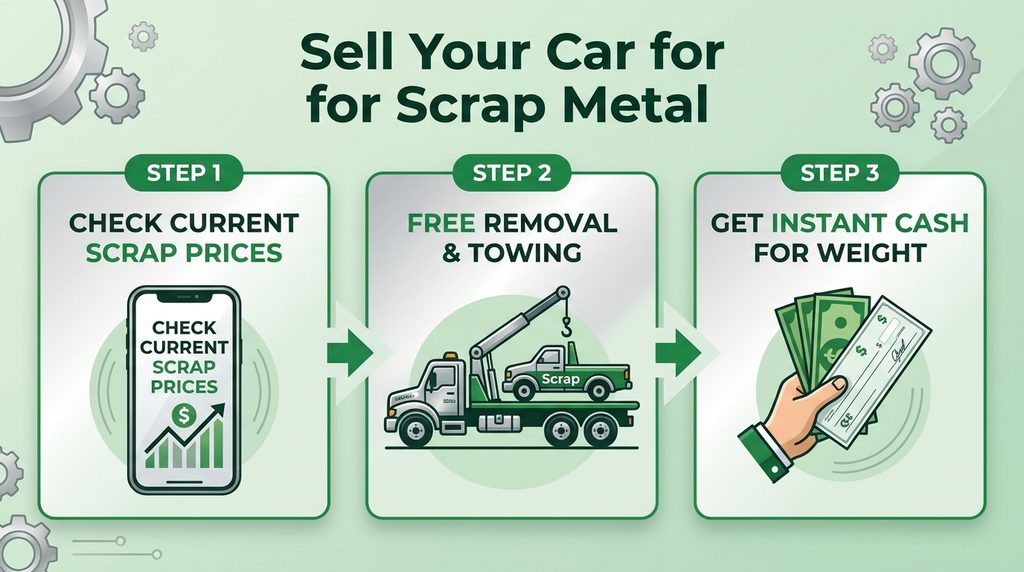
6. Sell Your Car for Scrap Metal
If your vehicle is extremely old, severely damaged, or missing several important components, selling it for scrap may be a practical option.
Scrap value is influenced by several factors, including vehicle weight, metal composition, current scrap prices, and the amount of material that can be recovered.
However, the scrap value of a vehicle is not always the same as its total value as a complete junk car.
For example, a vehicle with an intact catalytic converter, reusable wheels, or other desirable components may be worth more to a buyer who evaluates parts and salvage potential.
Before choosing a scrap-only offer, compare it with offers from businesses that purchase complete junk vehicles.
You may discover that selling the vehicle as a whole is a better financial decision.
7. Use a Junk Car Removal Service That Offers Cash
If your main priority is getting rid of a vehicle that cannot be driven, a junk car removal service may be the most convenient option.
These services are designed for vehicle owners who want to sell an unwanted car without arranging transportation themselves.
Depending on the company and service area, the process may include a vehicle assessment, a cash offer, scheduled pickup, and assistance with the necessary paperwork.
For example, Junk Cars Yard serves Lake Worth and surrounding South Florida communities. The business purchases junk, damaged, wrecked, and non-running cars, trucks, SUVs, and vans.
Its process is straightforward:
- Request a quote: Provide your vehicle’s year, make, model, location, and condition.
- Review the offer: Consider the proposed amount and confirm the pickup arrangements.
- Schedule vehicle removal: Choose an agreed pickup time and confirm access to the vehicle.
- Complete the transaction: Have the required ownership documents ready and finalize the payment and removal arrangements.
If you are located in Lake Worth or nearby Palm Beach County communities, you can contact Junk Cars Yard to discuss your vehicle and request an offer.
How Much Is a Non-Running Car Worth?
The value of a car that does not run depends on more than whether its engine starts.
Two vehicles of the same make and model can receive very different offers because their condition, mileage, components, and market demand may not be the same.
Here are some of the main factors buyers consider.
Vehicle Make, Model, and Year
The make, model, and year help buyers understand the vehicle’s potential value.
Some vehicles have parts that are in greater demand than others. A relatively newer vehicle may contain components that are still useful in the replacement parts market.
Older vehicles may have more value based on their weight and recyclable materials.
Engine and Transmission Condition
Major mechanical problems can significantly affect a vehicle’s value.
An engine that has completely failed or a damaged transmission may reduce its resale potential. However, the rest of the vehicle may still contain usable components.
Be honest about known mechanical problems when requesting an offer.
Mileage and Overall Condition
Mileage can help buyers estimate the vehicle’s general wear, although it is not the only consideration.
A car with higher mileage but a relatively complete body and usable components may receive a different offer from a heavily damaged vehicle with missing parts.
Missing or Damaged Components
Major missing components can reduce the amount a buyer is willing to pay.
For example, a vehicle without its engine, transmission, catalytic converter, or other important components may have a different salvage value than a complete vehicle.
Current Scrap and Salvage Market Prices
Scrap metal prices and demand for used automotive parts can change over time.
This means there is no universal price that applies to every non-running vehicle.
The best way to understand what your car is worth is to request vehicle-specific offers and compare the actual terms.
What Documents Do You Need to Sell a Car That Doesn’t Run in Florida?
Before selling your vehicle, it is important to understand the ownership and documentation requirements.
In Florida, a vehicle’s certificate of title is generally the primary proof of ownership. A non-running vehicle is still subject to applicable ownership transfer requirements.
In most standard transactions, you should have:
- Your vehicle’s certificate of title.
- Valid identification.
- Accurate vehicle information, including the VIN.
- Any additional documents required for the specific transaction.
If your title is electronic, you may need to arrange for a paper copy or follow the applicable electronic title transfer procedure.
If you have lost your title, contact the Palm Beach County Tax Collector or Florida Highway Safety and Motor Vehicles (FLHSMV) to understand the available options before completing the sale.
You should also remember to remove your Florida license plate before transferring ownership. Florida Statute 320.271 requires the seller to remove the registration plate before delivering the vehicle to the purchaser.
For official information, visit:
- Florida Highway Safety and Motor Vehicles
- Palm Beach County Tax Collector – Motor Vehicle Titles
If you are unsure about your paperwork, explain your situation to the buyer before scheduling pickup. Do not assume that a vehicle can be sold without the required ownership documentation.
Should You Repair Your Car Before Selling It?
This depends on the type of damage and the estimated repair cost.
Some vehicle owners spend hundreds or thousands of dollars trying to get an old car running again, only to discover that its resale value is still relatively low.
Before paying for repairs, consider the following:
1. Get a repair estimate.
Ask a qualified mechanic to identify the problem and estimate the total repair cost.
2. Understand the vehicle’s current value.
Consider what your car might be worth in its existing condition.
3. Compare repair costs with its potential resale value.
If the repairs are expensive and the vehicle has additional mechanical problems, investing more money may not make financial sense.
4. Request an offer without repairing it.
A junk car buyer may be willing to purchase the vehicle as it sits.
This gives you another option to compare before spending money on repairs.
In many situations, selling a non-running vehicle directly can be more practical than investing in repairs that may not increase its value enough.
Why Choose a Local Junk Car Buyer in Lake Worth, Florida?
Working with a local buyer can make the selling process easier, especially when your vehicle cannot be driven.
A local business may understand the area, coordinate pickup more conveniently, and provide information about its buying process.
Junk Cars Yard purchases unwanted and non-running vehicles in Lake Worth and surrounding South Florida communities.
The company offers:
- Cash offers for eligible junk and non-running vehicles.
- Pickup and towing arrangements at no extra cost for qualifying vehicles.
- Quotes based on the vehicle’s actual condition.
- Purchases of cars, trucks, SUVs, and vans.
- Service in Lake Worth and nearby communities.
Whether your vehicle has engine trouble, transmission damage, accident damage, or has simply been sitting unused, you can contact the team to discuss your options.
You do not need to repair or clean your vehicle before requesting an offer.
Ready to sell your non-running car?
Contact Junk Cars Yard at 561-559-5865 or visit Junk Cars Yard to request a quote.
Frequently Asked Questions
Where can I sell a car that doesn’t run near me?
You can sell a non-running car to a junk car buyer, salvage yard, auto recycler, private buyer, or certain used car dealerships. If you are in Lake Worth, Florida, Junk Cars Yard purchases non-running vehicles and offers pickup arrangements in its service area.
Can I sell my car if the engine is completely dead?
Yes. Many junk car buyers accept vehicles with completely failed engines. The offer will depend on the vehicle’s make, model, year, condition, and the value of its remaining components.
Will anyone buy a car that does not start?
Yes. Specialized junk car buyers and salvage businesses regularly consider vehicles that do not start. You should explain whether the problem involves the battery, starter, fuel system, engine, or another component when requesting a quote.
Can I sell a non-running car without repairing it?
Yes. You can request offers from buyers without repairing the vehicle first. Many junk car buyers purchase vehicles in their existing condition, including those with major mechanical problems.
Do junk car buyers offer free towing?
Some junk car buyers provide free pickup or towing for qualifying vehicles within their service areas. Always confirm that towing is included in the final offer and that there are no additional removal charges.
How much money can I get for a car that doesn’t run?
There is no fixed price for every non-running vehicle. Its value depends on the year, make, model, weight, overall condition, usable parts, and current scrap and salvage market prices. Requesting multiple offers is a practical way to compare your options.
Can I sell a car with transmission problems?
Yes. Many junk car buyers consider vehicles with transmission failure. Even when the transmission is damaged, other components may still have resale or recycling value.
Is it better to sell a non-running car to a junkyard or a private buyer?
It depends on your vehicle and priorities. A private buyer may be interested in a car that can be repaired or restored. A junkyard or specialized junk car buyer may be more convenient when the vehicle has extensive damage and you want to arrange removal without repairing it.
Does Junk Cars Yard buy non-running cars in Lake Worth, FL?
Yes. Junk Cars Yard purchases non-running, damaged, wrecked, and unwanted vehicles in Lake Worth, Florida. Contact the business with your vehicle details to request a quote and discuss pickup arrangements.
Final Thoughts
A car that no longer runs does not have to remain unused in your driveway or garage. Even if it has engine failure, transmission problems, accident damage, or missing components, it may still have value.
The right selling option depends on your vehicle’s condition, your preferred selling method, and whether you want to arrange transportation yourself.
Compare offers, understand the paperwork requirements, and confirm all pickup and payment terms before completing the transaction.
If you are in Lake Worth or a nearby South Florida community, Junk Cars Yard can help you explore your options for selling a non-running vehicle.
Call 561-559-5865 to discuss your car and request a no-obligation quote.